Picture a stone patio in the Finger Lakes at dusk. The last of the sunset fades behind the hills, guests find their seats, and overhead a canopy of warm white bistro bulbs flickers to life — soft pools of golden light catching the champagne glasses and the bride's veil. That single overhead detail does more to set the mood than almost anything else on the property. And it's entirely achievable with the right plan.
Hanging bistro lights over a patio wedding in upstate NY looks effortless when it's done well, but a sagging, uneven, or under-powered string can quietly sabotage the most beautiful ceremony. After nearly two decades wiring patios, tents, and rooflines across New York, we've refined exactly how to get that magazine-worthy glow that holds up through an evening — and an upstate breeze.
Why Bistro Lights Are the Gold Standard for Patio Weddings
Bistro lights — sometimes called cafe or string lights — use spaced sockets with larger, exposed bulbs that hang in graceful catenary curves overhead. Unlike tightly packed Mini Lights, which excel at wrapping trees and detailing railings, bistro strands are designed to be seen as the architecture of the space. They draw the eye upward and create an intimate "ceiling" of light even under open sky.
For weddings, warm white is almost always the right call. It flatters skin tones, photographs beautifully against a darkening sky, and reads as elegant rather than commercial. We reserve cool white for modern venues like Manhattan lofts, but for a stone or wood patio in the Hudson Valley, Saratoga, or the Finger Lakes, warm white is the classic, romantic choice.
Planning Your Layout Before You Hang Anything
The single biggest mistake DIY couples make is buying lights before measuring. Start with a sketch of the patio. Decide whether you want straight parallel runs, a crisscross diamond pattern, or radiating strands from a central point like a tree or pergola post.
- Parallel runs work best for rectangular patios and dining areas — clean, calm, and easy to space evenly.
- Crisscross (zigzag) creates a denser canopy and is stunning over a dance floor.
- Radial bursts from a center pole give a maypole or tent-like effect, perfect for round patios.
Measure each run point-to-point, then add 15–20% extra length for the natural sag (the catenary curve). That drape is what makes bistro lights feel warm instead of rigid. Aim for roughly 9 to 11 feet of clearance at the lowest point of the curve so tall guests can walk comfortably underneath.
Counting Strands and Bulbs
A typical commercial-grade bistro strand spaces sockets every 12 to 24 inches. For a wedding canopy, tighter spacing reads as more luxurious. Map your total linear footage, divide by the strand length, and always order one extra strand. Upstate patios are notorious for that one awkward corner you didn't account for.
Anchoring Points: The Part Everyone Underestimates
Lights are only as good as what holds them up. On an upstate patio, your anchor options usually include the house wall, existing trees, a pergola, or temporary poles. The cardinal rule: never hang the weight of the strand directly from the bulbs or wire. Run a stainless steel aircraft cable (guide wire) between anchor points first, then clip the bistro strand to that cable with zip ties or S-hooks every couple of feet.
This guide-wire method does three things: it carries the load, it lets you tension the line tight so the bulbs hang in a uniform curve, and it survives wind far better than a bare strand. For brick or stone walls we use masonry eye hooks; for wood pergolas, heavy screw eyes rated well above the load.
If your patio has no natural anchor points, freestanding poles set in weighted bases or planters are the professional solution. We build these constantly for commercial event spaces where drilling into the structure isn't an option, and the same approach works beautifully for a backyard celebration.
Powering the Display Safely
Bistro strands can usually be connected end-to-end, but every product has a maximum run before voltage drop dims the far end. LED bistro bulbs draw far less power than incandescent, letting you link many more strands safely — a real advantage for a large patio. Plan your power source early:
- Use only outdoor-rated extension cords and GFCI-protected outlets.
- Keep all connections off the ground and away from puddles — upstate evening dew is real.
- Consider a dimmer so you can lower the lights for the ceremony and brighten them for the dance floor.
- For large or remote patios, a quiet inverter generator may be necessary. We size these during a custom design consultation.
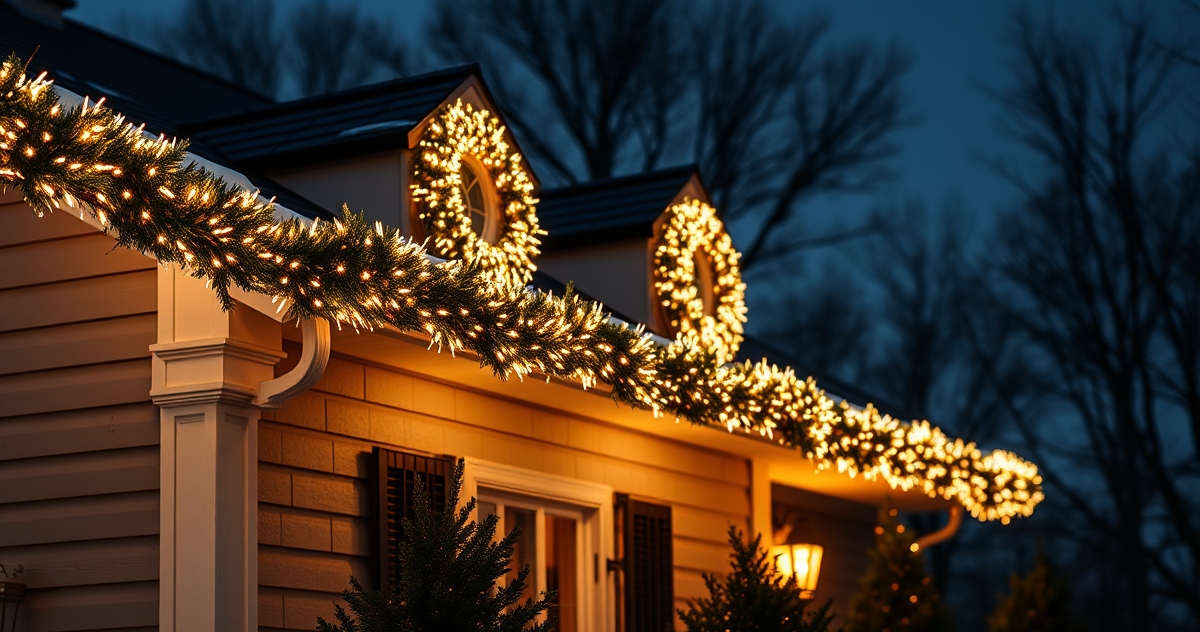
If your venue also uses overhead C9 bulbs along a roofline or fence for accent — those classic large-globe bulbs you'll recognize from holiday displays — keep them on a separate circuit from your bistro canopy to avoid overloading a single outlet. C9s add a gorgeous secondary layer of warm white glow along a porch edge or garden border without competing with the overhead drape.
Upstate NY Weather: Plan for It, Don't Fear It
Upstate weddings face real conditions: sudden Adirondack breezes, evening temperature drops, lake-effect humidity, and the occasional pop-up summer storm. None of these have to ruin your lighting — they just need to be planned for.
- Wind: The aircraft-cable method is your best friend. A tensioned guide wire keeps strands from whipping and bulbs from clinking together.
- Rain: Use weatherproof bulbs and connectors, and tuck power connections under cover. Quality bistro lights are designed to be left out for a full season — a passing shower won't faze them.
- Setup timing: Install at least a day ahead so you're not racing the sunset on the wedding day. We always build in a buffer for our upstate installs.
For couples planning a tented reception alongside an open patio, our guide on lighting a backyard wedding tent in the Hudson Valley pairs perfectly with this article — the two spaces should feel like one continuous glow.
Layering for a Magazine-Worthy Finish
The most memorable wedding lighting is never one element. Once your bistro canopy is up, layer in supporting light to create depth:
- Mini Lights wrapped around tree trunks, pergola posts, and shrub edges add a soft sparkle below the canopy.
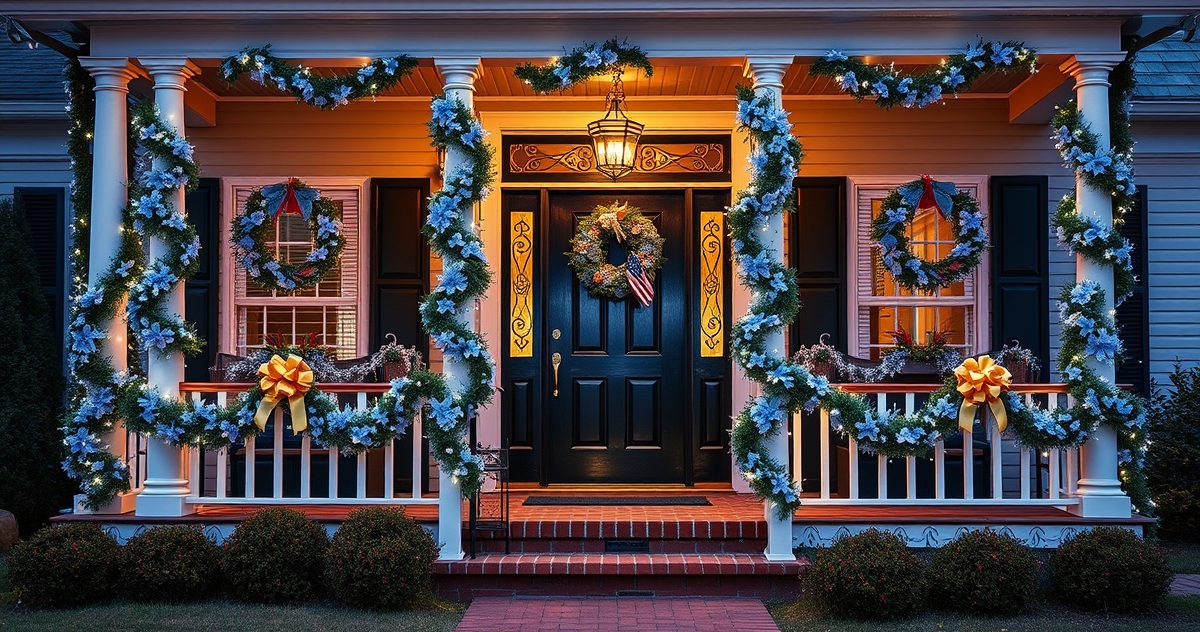
- Garlands threaded with warm white mini lights along railings, the head table, and the bar tie the whole scene together.
- Wreaths and Bows at the ceremony entrance or on chair-back accents add texture and a finished, intentional look.
This is the same layering philosophy we use on high-end residential lighting projects — the bistro lights are the headline, and the smaller details fill in the warmth. When all the warm white sources work together, the patio glows evenly instead of having one bright canopy floating over a dark floor.
DIY vs. Hiring a Professional
A small, simple patio with two solid anchor walls is absolutely a DIY-friendly project for a handy couple. But once you're spanning long distances, setting freestanding poles, calculating voltage drop, or working over a stone patio that you can't drill into, the time and risk add up fast. Our breakdown of DIY versus professional string light costs in NY walks through exactly where the line falls.
On your wedding day, the last thing you want is to be on a ladder re-tensioning a sagging line. A professional install means it's done early, done safely, and taken down for you afterward — no ladders, no tangled strands in the garage come Monday.
Frequently Asked Questions
How many bistro light strands do I need for a patio wedding?
Measure your total point-to-point runs, add 15–20% for sag, then divide by your strand length. For a typical 400-square-foot patio with parallel runs, most couples need 150 to 250 feet of bistro lighting. Always order one extra strand for corners and spares.
What color bistro lights are best for an upstate NY wedding?
Warm white is the classic, romantic choice. It flatters skin tones, photographs beautifully at dusk, and suits the stone and wood patios common across the Hudson Valley, Saratoga, and the Finger Lakes. Cool white is better reserved for modern industrial venues.
How do I keep bistro lights from sagging too much?
Run a tensioned stainless steel aircraft cable between your anchor points first, then clip the bistro strand to that cable. The guide wire carries the weight, letting you pull the line tight for an even, intentional curve rather than a droopy one.
Are bistro lights safe to leave up if it rains?
Yes — quality bistro lights use weatherproof bulbs and connectors designed for full-season outdoor use. Keep all power connections elevated and under cover, use GFCI-protected outlets, and a passing upstate shower won't be a problem.
How far in advance should I install wedding lighting?
Install at least one full day before the event so you're never racing the sunset on the wedding day. For larger setups with poles or generators, we recommend even more lead time and always build a buffer into our upstate installs.
Your patio deserves to glow exactly the way you've pictured it — even, warm, and worry-free from the first toast to the last dance. Our team designs and installs custom bistro, C9, and mini light displays for weddings across upstate New York, handling everything from anchoring to takedown. Request a free wedding lighting quote or contact us at (908) 336-2625 to start planning your perfect night.